
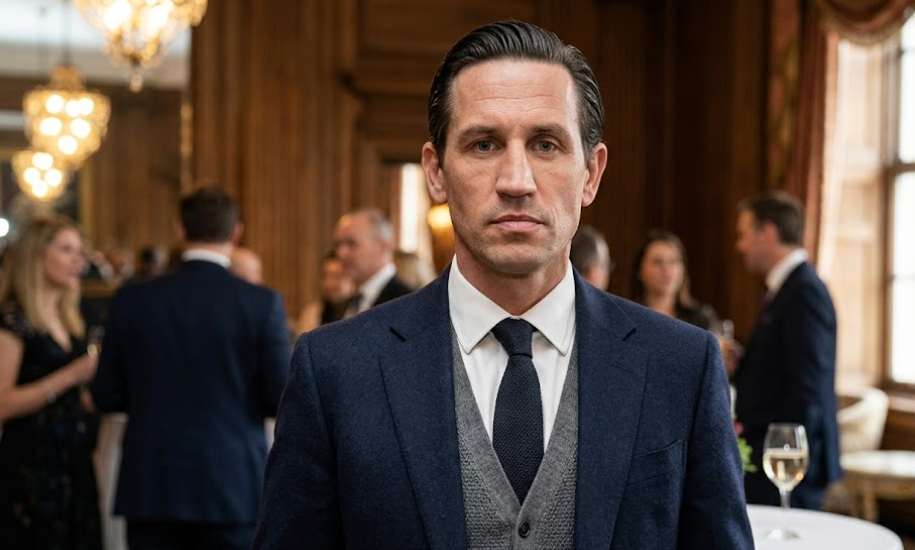
Some names from British children’s television fade quietly into nostalgia. Others disappear for far darker reasons. Paul “Des” Ballard belongs to the second category — a man who once lit up Saturday morning screens for millions of young viewers, only to see his entire public identity collapse under the weight of criminal convictions that shocked those who remembered him fondly. His story is not one of simple rise and fall; it is a layered, complicated account of talent, opportunity, ambition, poor decisions, and ultimately irreversible consequences.
As a former TV show host and stage actor, Paul “Des” Ballard occupied a unique space in British entertainment during the late 1990s and early 2000s. His cheerful energy and natural on-screen charisma made him a recognisable face for an entire generation of children. But behind that polished public image, a very different story was unfolding — one that would eventually make headlines not for entertainment, but for tragedy.
Quick Bio
| Detail | Information |
|---|---|
| Full Name | Paul Ballard |
| Known As | Paul “Des” Ballard |
| Date of Birth | 9 March 1982 |
| Birthplace | Essex, England, United Kingdom |
| Nationality | British |
| Profession | Former TV Show Host and Stage Actor |
| Notable TV Shows | Disney Club, Diggit (GMTV) |
| Co-Host | Fearne Cotton (Diggit, 1998–2002) |
| Major Stage Role | Smee in Peter Pan, Central Theatre, Kent (2001) |
| Business Activity | Unauthorised self-storage business, Essex (c. 2014) |
| Legal Status | Incarcerated — 19-year total consecutive sentence |
| Health Notes | History of seizures (2016 and 2019) |
Early Life and the Path Into Television
Paul “Des” Ballard was born on 9 March 1982 in Essex, England. From a young age, he showed a distinct flair for performance — the kind of natural presence that tends to draw people in without much effort. Whether it was a confident voice, a quick sense of humour, or simply the ability to command a room, those qualities would later define his career in entertainment.
His first confirmed appearance on British television came in 1995, giving him a foothold in the industry at just thirteen years of age. This early start allowed him to learn the craft of performing on camera long before most aspiring presenters had even considered auditioning. He took on roles that helped him build confidence, develop timing, and understand what it took to hold an audience’s attention — skills that would serve him well in the years ahead.
One of his earliest notable appearances came in the long-running British sitcom Bottom, where he played a small but visible role. While the part was modest, it gave him exposure to a wider audience and began to establish his name within the industry.
The Rise of a Former TV Show Host
Paul “Des” Ballard’s career truly took shape when he became associated with children’s television, a genre that perfectly matched his lively, accessible personality. He appeared on the Disney Club, a popular programming block that reached a large and enthusiastic young audience across the UK. His segment — known as Roadhog — involved visiting schools and viewers’ homes in a brightly decorated camper van, bringing excitement and personality directly to his audience. It was the kind of interactive, grassroots television that children responded to deeply, and Ballard thrived in it.
However, the defining chapter of his career as a former TV show host began in 1998, when he became a co-host on Diggit, a GMTV Saturday morning programme. He shared the presenting duties with Fearne Cotton, who would go on to become one of Britain’s most prominent broadcasters. Together, they brought high energy, humour, and a youthful spirit to weekend mornings for an audience of young viewers who tuned in religiously each week.
From 1998 to 2002, Ballard was a household name in the truest Saturday morning sense. His four-year run on Diggit made him one of the recognisable faces of his era. For a generation of British children, waking up on a Saturday meant switching on the television and seeing Paul “Des” Ballard delivering entertainment with effortless enthusiasm. That kind of cultural imprint does not fade easily — and for many, it never fully has.
Stage Work and Expanding His Range
Away from the cameras, Paul “Des” Ballard also demonstrated that his talents extended beyond television. In 2001, while still active as a presenter, he took on the theatrical role of Smee in a stage production of Peter Pan at the Central Theatre in Kent. The part — that of Captain Hook’s bumbling but loyal first mate — was a natural fit for someone with Ballard’s comedic timing and physical energy.
The role showed a willingness to step outside the comfort zone of television presenting and tackle live performance in front of a theatre audience, where there are no retakes and no safety net. It added another dimension to his public identity, confirming that he was more than a one-format entertainer and had genuine range as a performer.
Life After Television and Business Decisions
By the early 2000s, Ballard’s presence on mainstream television had begun to wind down. Presenting careers in children’s television are often cyclical, with faces changing as formats evolve and new talent emerges. As his screen work reduced, Ballard transitioned into other areas of activity.
Around 2014, he became co-operator of a self-storage business in Essex. The venture, however, was situated on protected green-belt land and operated without the necessary planning permissions. Enforcement action followed, and the legal process that emerged from this period contributed to a financial confiscation order issued against him by the courts. It was an early indication that the disciplined world of television had given way to riskier choices in his personal and professional life.
The Convictions That Changed Everything
The most defining — and most devastating — chapter of Paul “Des” Ballard’s life came in 2020, when two separate but equally serious criminal matters resulted in prison sentences that effectively ended any remaining public reputation he had.
In February 2020, he was involved in a multi-vehicle collision in Romford that resulted in the deaths of two people. Subsequent investigation revealed that Ballard had consumed cocaine prior to driving and had previously experienced seizures in 2016 and 2019, which he had failed to properly disclose to the relevant authorities. In 2021, he was sentenced to nine years in prison and banned from driving for eleven and a half years.
Later in September 2020, in a completely separate incident, Ballard was convicted of rape, attempted rape, assault, and threats to kill — offences committed at a hotel in Essex. For these crimes, he received a further ten-year prison sentence, to be served consecutively alongside the driving sentence. The combined total of nineteen years made clear the severity of what the courts had determined.
The revelations were deeply shocking to those who had grown up watching him on Saturday morning television. The contrast between the energetic, cheerful presenter on screen and the individual described in court proceedings was stark and difficult to reconcile.
Legacy: Two Stories, One Name
Paul “Des” Ballard’s legacy is inseparable from this painful contradiction. On one side sits a genuine contribution to British children’s entertainment — four years of quality television on Diggit, Disney Club appearances, a theatrical role that showed real range, and the kind of warm presenting style that leaves a lasting impression on young audiences. These achievements were real, and for a time, he was very good at what he did.
On the other side sit choices that caused irreversible harm to real people — victims of violence, families who lost loved ones on a road in Romford, and a broader public trust that was permanently broken.
His story does not offer easy conclusions. It is not a tale of pure villainy, nor one of simple misfortune. It is the story of a person who built something meaningful, then dismantled it — and in doing so, harmed others in ways that no amount of nostalgia can soften or excuse.
For readers following this biography through Digi Journals, this account stands as a reminder that public figures carry the full weight of their private actions — and that the brightest lights in entertainment history can cast the darkest shadows when those actions finally come to light.
You May Also Read:Katie Barbet: The Private Life Behind Matt Barbet’s Public Career
