
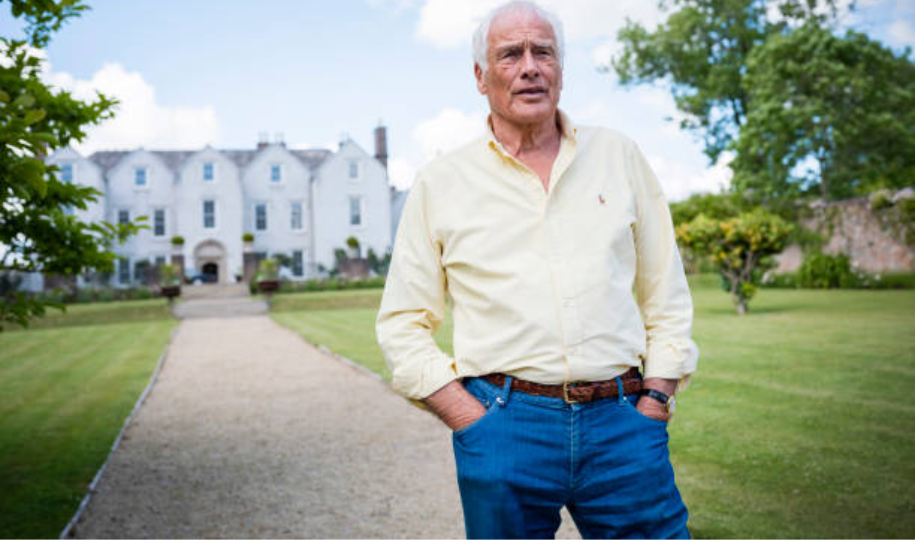
Robert Kilroy-Silk remains one of the most recognisable and polarising figures in British public life. Over a career spanning five decades, he has traversed the worlds of high-level politics, academia, and daytime television, consistently managing to court controversy and capture the public imagination. Born in the heart of Birmingham during the height of the Second World War, his trajectory from a working-class background to the national stage is a narrative of ambition, ideological fluidity, and relentless media presence. Whether he was challenging the status quo in the House of Commons, debating the future of the European Union, or hosting his eponymous talk show, Kilroy-Silk has never shied away from being an “unapologetic nuisance.”
Quick Bio: Robert Kilroy-Silk
| Attribute | Details |
| Full Name | Robert Michael Kilroy-Silk |
| Born | May 19, 1942 (Birmingham, England) |
| Spouse | Jan Beech (married 1963) |
| Education | London School of Economics |
| Key Roles | Former Labour MP, UKIP MEP, Leader of Veritas, TV Broadcaster |
| Residence | Warleigh House, Plymouth (as of 2015) |
The Early Years: Formative Experiences
The story of the man we know as Robert Kilroy-Silk began as Robert Michael Silk. His early life was marked by the tragedy of war; his father, a Royal Navy stoker, was lost at sea in 1943 when Robert was just a toddler. Following his mother’s remarriage to John Kilroy—a family friend who formally adopted him—the young Robert adopted the double-barrelled surname that would eventually become a brand. His academic journey was not without its hurdles; he famously failed his eleven-plus examination initially, only to persevere and eventually secure a place at the prestigious London School of Economics. This period proved formative, immersing him in the radical student politics of the era and setting the intellectual stage for his later transition into a career as a lecturer in politics at the University of Liverpool.
Political Metamorphosis: Labour, UKIP, and Veritas
Kilroy-Silk’s political career is perhaps best described as a series of radical departures. He first entered the House of Commons in 1974 as a Labour MP for Ormskirk, later representing Knowsley North. During this time, he was a staunch, often abrasive, advocate for socialist values, famously declaring that the Labour Party must act as a “class party” fighting a “class war.” However, his relationship with the party eventually fractured. Tensions with the far-left “Militant” tendency and ideological clashes led to his resignation from the Commons in 1986.
Years later, he re-emerged on the political scene in a completely different guise. Embracing a staunchly Eurosceptic stance, he was elected as a UKIP Member of the European Parliament (MEP) in 2004. His tenure at UKIP was short-lived, marked by internal friction and his failed ambition to lead the party. Undeterred, he launched his own political vehicle, Veritas, in 2005. Though Veritas struggled to gain significant electoral traction—earning the cynical nickname “Vanitas” from critics—Kilroy-Silk remained a vocal presence in the debate surrounding the UK’s relationship with Europe, ultimately earning the moniker “The Godfather of Brexit” from some observers.
Television Stardom and the “Kilroy” Phenomenon
While his political life was defined by shifting allegiances, his broadcasting career provided a level of national fame few politicians achieve. As the host of the BBC’s Kilroy for nearly two decades, he became a fixture of British daytime television. His style—characterised by his tan, sharp suits, and combative, inquisitive interviewing technique—made the show a lightning rod for debate. He tackled social issues with an intensity that often drew both massive viewership and significant criticism. His television success provided substantial financial stability, allowing for a lifestyle that included high-value properties in Buckinghamshire and a sprawling estate in Spain.
Personal Life: Jan Beech and Lasting Stability
Behind the television persona and the political firebrand stands a more private figure anchored by a long-term marriage. Robert married Jan Beech in 1963, when they were 18 and 17, respectively. Throughout his turbulent career—spanning his academic years in Liverpool, his time in the shadow cabinet, and his media career—Jan has remained a constant presence. The couple raised two children together, successfully maintaining a private family life despite the public glare that frequently surrounded Robert’s professional endeavors. In more recent years, they have sought a quieter pace of life, notably moving to Warleigh House in Plymouth in 2015.
Robert Kilroy-Silk in 2026
As of May 2026, Robert Kilroy-Silk has largely receded from the frontline of active political contention. Unlike his high-profile decades of the 80s and early 2000s, his current footprint is primarily historical, centered on his legacy as a populist voice who helped shape the discourse on British sovereignty and media engagement. While he occasionally appears on political panel shows or in media analyses, there is no indication of a return to electoral politics. His life now serves as a case study for the intersection of media personality and political ideology, illustrating how a single individual can pivot between institutions while maintaining a distinct, albeit controversial, public identity.
Financial Standing and Legacy
Estimating the net worth of a public figure with such varied income streams—ranging from MP and MEP salaries to lucrative television presentation fees—is complex. Historical disclosures paint a picture of significant wealth accumulated during his peak broadcasting years. His ability to navigate professional transitions, often leveraging his media platform to enhance his profile, has undoubtedly contributed to his financial resilience. Even as he has divested from high-profile assets like his multi-million euro Spanish estate, his career remains a testament to the high-stakes, high-reward nature of British media and political stardom.
For more insights into the lives of influential figures and political analysts, continue exploring the archives at Digi Journals.
You May Also Read:Kerrie Taylor Biography: Age, Husband & TV Career
